Thursday, November 11, 2010

Blog entry 7

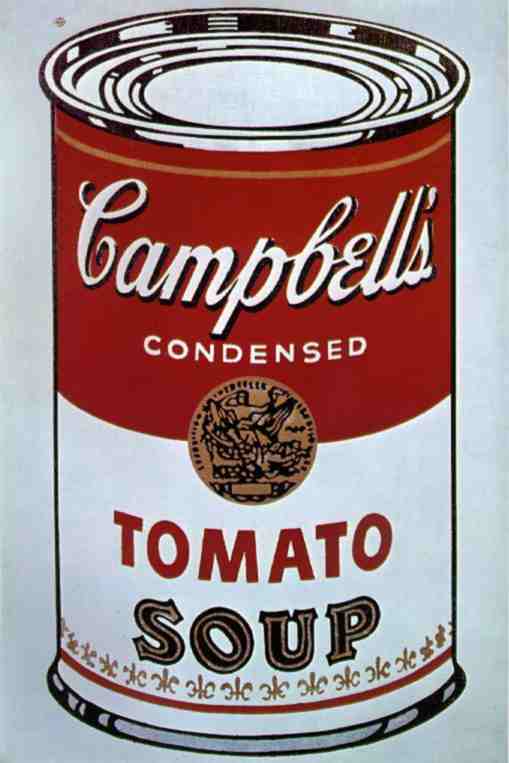
Where does art belong? Are there any restrictions on where art can or can not be? I dont believe there should be a limit on the location of art. “In other cultures, art has never been restricted to pictures on the wall, but has always been something much more integrated with life.”(251) This makes me think of advertisements. I find that advertisements are a key part of art. I find commercial art to still be art. The first artist that comes to mind first is Andy Warhol. This is an example of commercial design influencing fine art,Andy Warhol's Campbell's Soup Can. Andy and other Pop artist from the 60's were heavily influenced by advertisements. Warhol was even a commercial artist before we made any attempts at the gallery system. Another example that comes to mind is street art. Artist like Banksy and COPE2 prefer the urban setting to display there work. In my eyes graffiti is often on the same level as works in galleries. This brings up the issue of the legality of street art. Should it be legal? I don't believe thats possible when it comes to privately owned buildings. Maybe city's should make a greater effort to give street artists opportunities to create work in legal ways. If there were legal opportunities for street artists I'm not convinced that they would go for it just because than they would lose the thrill of having it be illegal. Maybe street art is just this Catch-22 that I can't seem to grasp yet and maybe thats why I find my self so constantly interested and captivated by it.
This week in class, photographer Terri Warpinski presented her work. Some of Warpinski's landscape photographs really appealed to me. I also found that the more tweaked with work appealed to me less and less. Her brightly colored landscape photo's had a since of mystical beauty that was awe striking. Warpinski's work reminded me that there is such powerful beauty in the world that is just waiting to be captured, with a little help from technology of course. Another aspect of Warpinski's work that intrigued me was how much her work has lead her world travelings. I find that art allows you to see the world through a new unique lens and Warpinski was able to use her lend all over the world. She had such a unique and neutral seeming opinion about the world and its many cultures and conflicts. Her works and stories about Israel are what interested me the most. The heart breaking story about the little boy who's father was killed crossing the border to try and get to work so he could support his family was both touching and view changing. I also found my self extremely intrigued in her following of the berlin wall. Something so powerful and evil as the berlin war is gone and the kill zones have become unique public spaces that better the community. I would be interested if there was a visual difference between the two sides that the wall divided. If the building on her left just didn't match the ones on her right.

Thursday, October 21, 2010

Blog 4


This week in lecture, photo artist Dan Powell discussed his work with us. Powell discussed how his career as a photographer started as a studio artist and developed into going out into the world to take photographs of life. Even though Powell did return to studio work, The idea of art on the real world, not just in the studio, could still be seen as he develops and uses photographs from his world travelings. The idea of the difference between art made in the studio and art made out in the real world has a huge contrast in the art world. I believe that photography is one of the only art forms that can make that transition a lot easier than any other art form. Photographers can capture an actual moment in real life, something that no other art form can truly do. Photography allows the viewer to gaze upon a real life as if it were art, giving real life a whole new context. It is bringing real life into the gallery, which I believe is a way of bridging the gap in between the studio and the real world.
In this weeks reading Suzi Gablik interviews James Hillman who is a Jungian analyst. In this interview Gablik brings up that just how Hillman believes therapy isn't connected to the real world because it is done behind close doors, Gablik believes that art done behind closed doors in the studio isn't useful in this day and age. Like how Hillman believes that therapy might help you cope with how terrible riding the subway can be, it makes no steps towards any attempts to improve the terrible subway. Gablike has a similar view about art, she finds that the artist who paints about the trash in the river doesn't actually do any good because its not actually cleaning up the river. I do however find that this is a stretch because the art about the river could spread ideas through the only way the artist may no how to express himself, through his art. I do also believe that going out and leaning the river, no matter how helpful, is not art. We live in a time where the borders of what art can be have definitely been blurred and in some cases broken down but I still find cleaning up a river isn't art. It should be our world wide social responsibility to clean up the rivers. Making it art almost makes it seem that only people with artistic value can help out. I know that this isn't how Gablik intended her idea to be perceived but I couldn't help but feel alienated by the idea of cleaning the river as art. Art should be comments on society that open our eyes to something we may not have noticed, like how Andy Warhol made consumerism so beautiful, as seen here.
My favorite part of this interview is when artist Margot Mclean, who had been there listening the whole time, attempts to stand up for art. Mclean seems to recognizes the difference between art and cleaning the river when she asks, “What happens if you go to your studio and do what you do merely 'self-indulgently'---and than you also go out and collect garbage off the street, or organize your community for recycling, or you go to a shelter and cook for the homeless, and you do this as a very devoted service to your environment?” (197). Gablik comes back by saying how this is ok but not ideal and how time in the studio is time lost. Is an artist that never creates art just helps out the community still and artist? They are obviously really great people and should be admired as that, but I wouldn't say they could still be classified as artists.  

Thursday, October 14, 2010

Blog #3

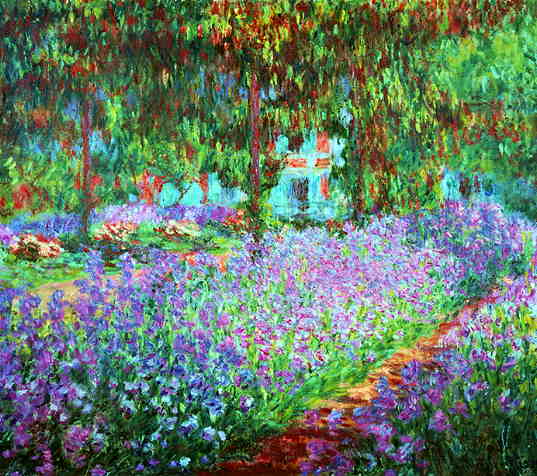
        The artist who presented his work in class this week was Jack Ryan. Ryan is a multi media artist and during his presentation he did these exercises to show us how technology helps us test the way we perceive  things like high frequencies of sound for example. Out of all of Ryan's works that varied from all different mediums, I was most impressed with his drawings. To me, his drawings showed the Ryan's amazing artistic talent and the rest of his works proved his ability to think conceptually. One of the things I liked most about Ryan's work was how his gallery shows had the appearance of just random art scattered throughout the room but as you dive deeper  into the individual pieces it becomes clear that all the works are based from a single concept. I find Ryan's way of setting up his galleries has a lot to do with the idea of how we perceive reality. What might originally be perceived as random and scattered is actually a complicated and connected body of work for the viewer to dive into. Ryan also brought up the idea of the sublime, something that our modern society is claimed to never be able to recognize. The idea of the sublime in art reminds me of the impressionists, especially Monet. Monet's art focused on the light and color of a moment flashing by in time, attempting to capture that beauty. http://www.ibiblio.org/wm/paint/auth/monet/last/giverny/monet.giverny.jpg 
To me the attempt to capture the beauty of a moment is like an attempt to capture the sublime through art.
     "The artist is not a special kind of person, but every person is a special kind of artist"(Coomeraswamy), in the reading Suzi Gablik interviews Satish Kumar in Ten Thousand Artists, Not One Master. In this chapter, Kumar brings up the point of integration, the question of how to combine art and everyday life. Should we be able to live alongside art constantly? I cant help but think that maybe that form of integration would devalue the art that I have grown to adore. Another interesting point brought up by Kumar is his response to Gablik's question of what he thinks the role of the artist is in a civilization that is in decline. Kumar responses by emphasizing how important the role of the artist is and how if anyone will be able to "save the wold" it will be the artist because they can still recognize the unity between civilization and nature. This puts a lot of power and responsibility in the hands of the artists. Are the artist of western culture ready for that kind of cultural importance? Only time well tell and hopefully culturally we make the right steps towards a better civilization. 

Thursday, October 7, 2010

Entry #2

In class, digital artist Colin Ives presented and discussed his work. Ives's work was extremely eco aware; presenting problems like the clearing of forests and the lives of different species living in modern society in a very modern and artistic way. At one point Ives brought up the idea that all he can hope for is that his art work might make an impact on the viewer and create an awareness of certain problems. Most of Ives works are interactive video installations. By bringing the viewer into the art, it hopefully forces the viewer to think about the art in a completely different way than if they were just standing there looking at the piece with zero involvement.
In todays art wold, is forcing the viewer to interact with the art essential to allowing the viewer to really think about the concept behind the art? I believe that at times it is. In Ives's case, interacting is crucial. When i think of interactive art my mind immediately jumps to Carsten Holler's Test Site, a 2006 installation in the Tate Modern. This piece allowed the public to slid down tubular slides inside the museum. The tallest slide reached an astonishing five stories. Was Holler commenting on the need of new more eco friendly forms of transportation? Does Holler imagine a London where people  use slides instead of machines like elevators and escalators? Or does he just want to great playful sculptors that everyone can enjoy and be brought back to there childhood? Only Holler truly knows the complete reasons for why he created these slides but the participator, not the viewer, is forced to create there own opinions, while having fun. Maybe its about time people started having more fun at art museums.
www.theartwolf.com/imagenestAW/carsten_holler_test_site.jpg
In this weeks reading we read Doin' Dirt Time, an interview with Rachel Dutton and her husband. The interview goes over how this artist couple living in South Central Los Angeles go from making art in the city to leaving everything behind and moving to the the middle of nowhere and than to giving up art and there fridge completely. What is it that drove these two to so suddenly drop everything for a new simpler life? The answer is the apocalypse, yes the apocalypse. In Los Angeles they were surrounded by death, violence, poverty and homelessness and the two artist new that there most be more to life than the destructive nature of the city. Dutton now believes that to truly live they must be completely connected to the earth and respect the earth as living and not just a place for humans to build our concrete jungles.
For me, Dutton brings up the question of is it ethical to create art in a society thats grown so self destructive. I believe that art plays a key role in society. It may not cause immediate drastic change but it causes individuals to think and possible create small changes. Even though going to live a lonely life in the dessert drastically changed the way Dutton lives, it does not spark social change. I believe that art, when used probably, has the potential to spark small social changes but on a much more massive scale than Dutton.

Friday, October 1, 2010

Entry #1

I left the lecture today with one huge question on my mind. This question was, should art be available to the public? My immediate answer was yes but as I thought more and more about it, the more questions kept popping up in my head. Next thing I knew my brain was bombarded by questions like what separates advertisements from art? Is design art? and what makes the street art of Shepard Fairey fine art? Is it fine art? This goes on and on and trust me, its quite overwhelming but to me art is supposed to feel overwhelming.
I do though still believe that art can be available to the public. For example, I'm a huge fan of the Artist KAWS, his colorful and cartoon influenced works reminds me that art can be fun. The link below is an image of the KAWS designed album art work for Kanye West's album 808s & Heartbreak. 
I believe that just because something is mass produced like a CD cover would be, doesn't make it any less art than what I see in galleries. Art has always had its commissions and CD covers like the Kanye one, in my opinion, are like the modern commissioned portraits.
Shepard Fairey's fine art talents can be seen in his gallery shows. Fairey has proved himself as an extremely talented artist and because of that his simple stencils of Andre the Giant should be seen as art. Artist need to have talent to back up there ideas. For example Marcel Duchamp, who is famous for his ready made art, proved his talents with his cubist paintings. 
In response to the reading in Suzi Gablike's Conversations Before The End of Time, I find that this generation of young artists, just like every generation to come before them, is morally and artistically obligated to question and attempted to break away from the preconceptions of what art is. If people haven't always rebelled against the way things were done before them, art would never evolve. The example that I immediately think of is the jump from post WWII American abstract expressionism to the vibrant and fun Pop art movement in the 1960's. If artist like Robert Indiana, Andy Warhol or Roy Liechtenstein never questioned why art had to have such a macho, emotion filled attitude was relevant is a modern consumerism country, art would not have progressed the way it has. Our generation will unintentionally, or intentionally, change the way art is seen and done and the generations to follow will do the same and so on and so forth. Its a never ending cycle but that doesn't mean art is progressing toward an inevitable end. When Pop art was becoming the norm, many artists started going back to there fundamental skills and creating more realism and ever hyper realism. The jump from Pop to realism makes since because Pop art like the works of Andy Warhol are very heavily dependent on photography and realist artist strive to make they're works as photographic like as possible. So to sum it up I believe that artist need to question art so that art will progress and continue the cycle. Who knows, this generation could be heavily influenced by Rococo. The opportunities are always endless.